Traveling Differently: Embracing the Journey with Disabilities
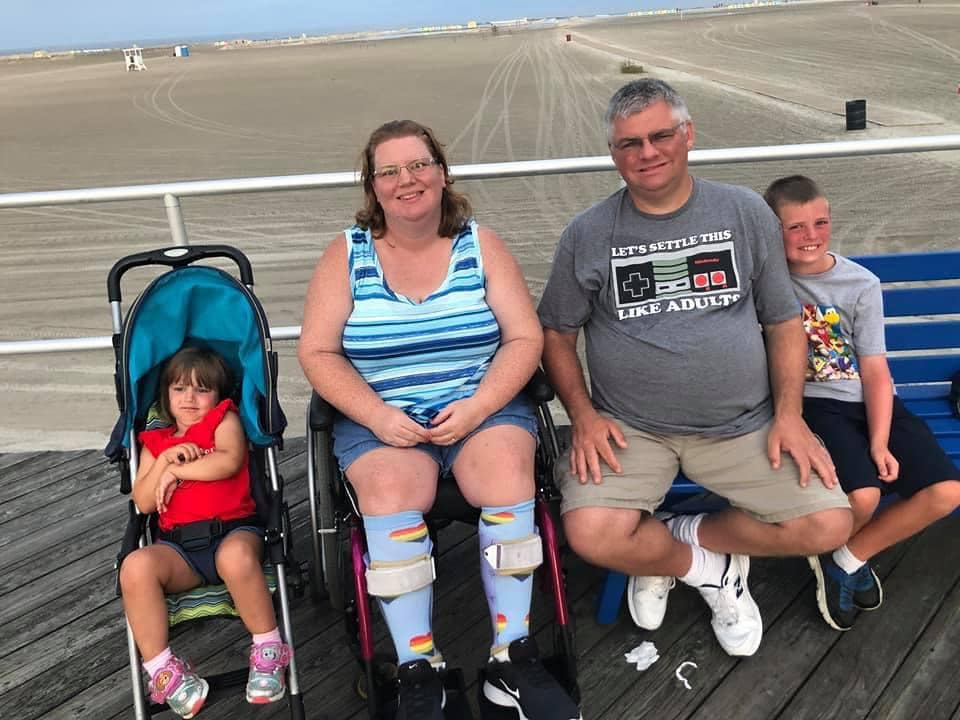
Did you know that people with disabilities constitute the world’s largest minority group, and it is the only group that any of us can become a member of at any time? The Americans with Disabilities Act was passed in 1990, which has helped individuals with disabilities to have more access to and travel. Yet, there are still a lot of places that are not handicapped-friendly, and this can be a huge disservice to those traveling with disabilities. I became physically disabled in 2018, and it has allowed me to see traveling from a whole new perspective. Here are just some things to think about when traveling with someone with disabilities, or with a disability yourself!
- Understand the terminology: A hearing-impaired room uses lights and vibrations to alert individuals who may not hear sounds. This can include a TTY phone (text telephones), a telephone compatible with hearing aids, flashing light fire/smoke alarms, and a closed-captioned TV. A “Florida Special” accessible room is a regular room with extra handrails near the bathtub and toilet. It also offers a lower toilet height and an open bed frame. A wheelchair-accessible room has a wheelchair-accessible route in the room and may either have a roll-in shower or a tub.
- Handicapped accessibility has some standards that must be followed for a room to be accessible, and others that are not as regulated. One major aspect that may vary is bed height. For someone who uses a motorized wheelchair, a higher bed height may work the best, while someone who will be transferring from a manual wheelchair would want a shorter bed height. There are ways to work around these issues, including using a transfer board or chair, removing unnecessary linens, and contacting housekeeping to modify bed frames, if possible.
- Hotel accessibility includes having a ramp or wheelchair access to enter. It also includes using elevators and placing rooms near them. Remember, in a resort that does not have elevators, an individual with a mobility impairment should have a room on ground level. Having TTY access or an individual who knows American Sign Language at the main lobby is helpful for those with hearing difficulties when checking in.
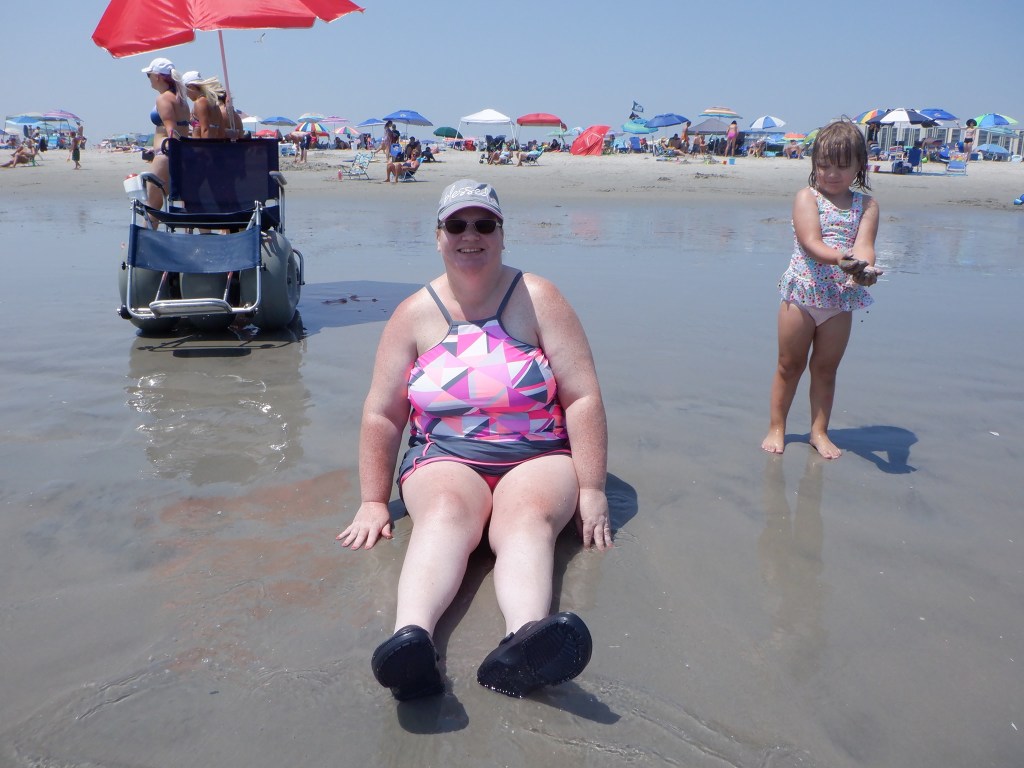
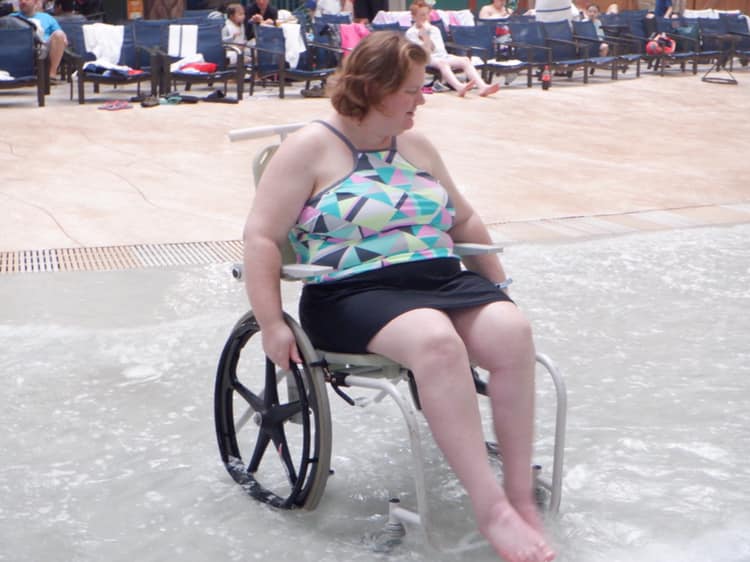
- Traveling with a mobility impairment or disability includes bringing any supplies or mobility aids with you. You also risk these supplies being damaged during travel, especially on airplanes. Sometimes, you can or will need to rent specialized equipment, which comes at a cost. This equipment includes motorized or manual wheelchairs for sand, transfer chairs, shower chairs, motorized scooters, and Hoyer lifts. You can also have supplies delivered to the resort, such as Foley catheters and feeding supplies. If they are having any equipment or supplies delivered ahead of time, contact the venue to allow for a smooth delivery or pick up. You can also contact the venue if you have any questions about vendors frequently used in the area for medical supplies, as they know which ones they have worked with.
- Each amusement park offers signage or information on their park maps about the need to transfer from motorized scooters to wheelchairs. They also indicate crate locations for those using service animals. Most, if not all, amusement parks offer some sort of disability access pass, and each park (Disney, Universal, Hershey Park) has its own criteria. This may require an interview with the disabled person before the trip or upon entering the park. Not all disabilities are considered to require disability access. For example, all of Disney’s ride queues are wheelchair friendly, so using a wheelchair does not permit the rider to meet the criteria for the disability access pass.
- Accessibility is not enough. Just because a resort, amusement park, cruise, or accommodations state they are accessible, it does not mean every aspect will be accessible. And it may be things you don’t even consider when booking the travel. Finding out that the resort does not have wheelchair access to the beach or does not have a handicapped lift into the pool can make the disabled person feel underappreciated and undervalued. You may also want to research any excursions or activities in the area for information about handicapped accessibility. Most cruise excursions list information about handicapped accessibility and discuss if there will be accessible transportation. Also, remember some ports of call are only accessible via tendering, which may be an issue for those who are mobility impaired.
- One thing I have learned is that while the resort or venue may be handicapped accessible, it may not be family-friendly when it comes to accessibility. For example, Disney Cruise Lines’ accessible rooms only have one bathroom, even if it is a deluxe cabin. I have found that MSC cruises do not have standard staterooms that connect with accessible ones; their accessible rooms are only for two people. The Amtrak Autotrain has an accessible sleeping cabin only for two people.
The biggest thing I can recommend when traveling with a disability is understanding the modifications you need. Know the restrictions and the types of modifications that would work best. I personally do a lot of research before I travel, including a lot of disabled traveler websites and bloggers, to see what their opinions are before I book a vacation. The personal knowledge of those who have traveled with disabilities and my own personal knowledge always comes into play. I have been in some hotels where I have not required a handicapped-accessible room since the room and bathroom were large enough to fit a wheelchair or a walker comfortably. I have been able to go camping with my family because we were able to get an accessible cabin for me or a campsite that was near a bathroom. I have also had the experience of being in handicapped-accessible rooms that were the farthest room from the hotel entrance or were hard to access due to carpeting in the hallways. Traveling with a disability can be fun if you do extra planning beforehand! Traveling with a disability can be fun if you do extra planning and thought beforehand.

Jennifer Powell
Bel Air, Maryland


You May Also Like

Never Look Back Vacations: Our Year End Wrap Up!

Adult – Only Trip to Universal Orlando Resort and Walt Disney World Resorts